Air pollution is globally recognised as a major challenge of our time. Atmospheric chemists use three main methods – field work, laboratory studies and computer simulations – to build an understanding of anthropogenic harm. Field measurements are used to inform and refine large-scale computer modelling simulations, in an effort to establish the chemical mechanisms of compounds of concern. These results can then be compared to laboratory studies where chemists can use controlled environments to study the reactions of specific compounds.
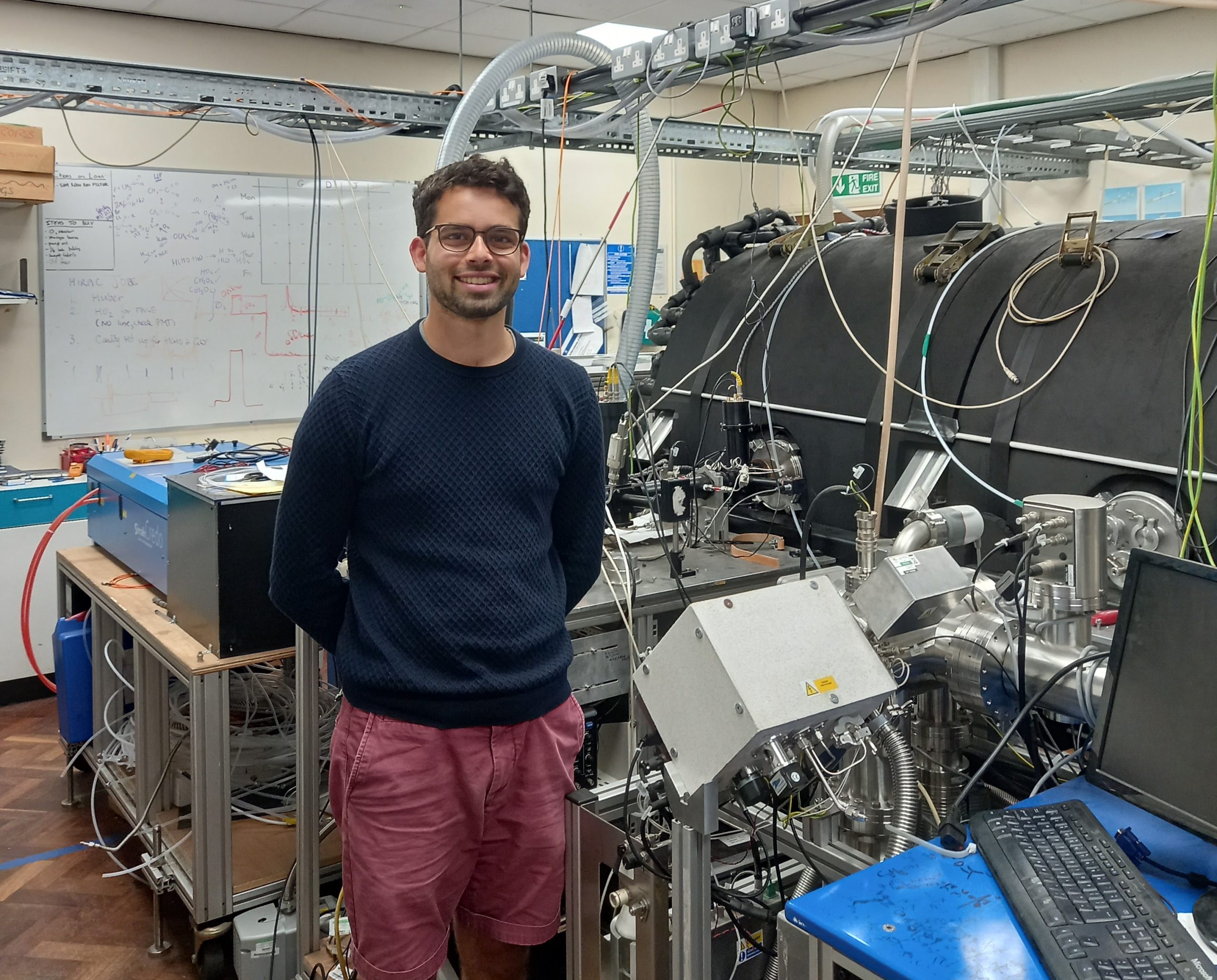
At the 27th International Symposium on Gas Kinetics and Related Phenomena 2024, we were delighted to learn that University of Leeds student Danny McConnell was awarded the ‘Best Poster’ prize for his work on glyoxal, a compound of interest for its role in harmful secondary organic aerosol production. Danny uses a Kore PTR-TOF-MS in the School of Chemistry at the University of Leeds to track the removal of important volatile organic compounds (VOCs) in an atmospheric simulation chamber. The chamber is also coupled with a laser induced phosphorescence instrument designed to detect glyoxal. His new data suggests that aromatic compounds in the marine boundary layer contribute to the production of glyoxal.
A critical goal of Danny’s work is to explain discrepancies between the observed and the modelled data on glyoxal production from hydrocarbon oxidation. This important research not only adds to our knowledge base of the gas kinetics involved, but also helps to refine chemical mechanism models. We wish Danny and his group at the University of Leeds many congratulations on their prize and continued success with their work.