Kore works closely with our parent company, Beijing SDL Technology Co Ltd, to develop instruments suitable for developing markets in China. We are proud to deliver sensitive analytical instruments at a sensible price, thereby widening access to this much-needed resource. A current major focus in China is contamination analysis in semiconductor fabrication plants. For this type of work, our TOF-SIMS instruments are perfect for the Chinese market. Our SurfaceSeer S and SurfaceSeer I are highly sensitive to surface contaminants within the top three to four atomic layers, with detection limits of 1×10⁹ atoms/cm2 (ppm), and they cost a fraction of the price of our competitors’ instruments, thereby lowering the barrier to acquisition.
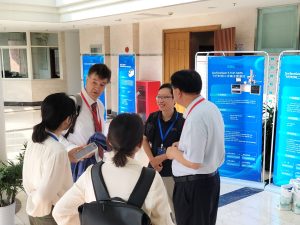
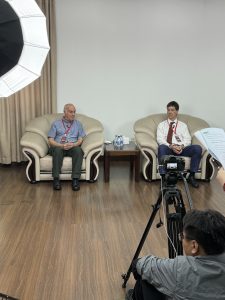
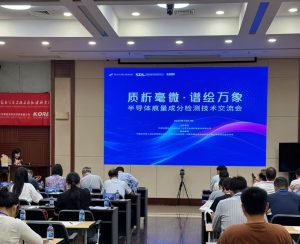
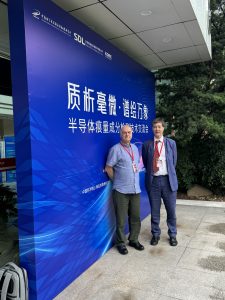
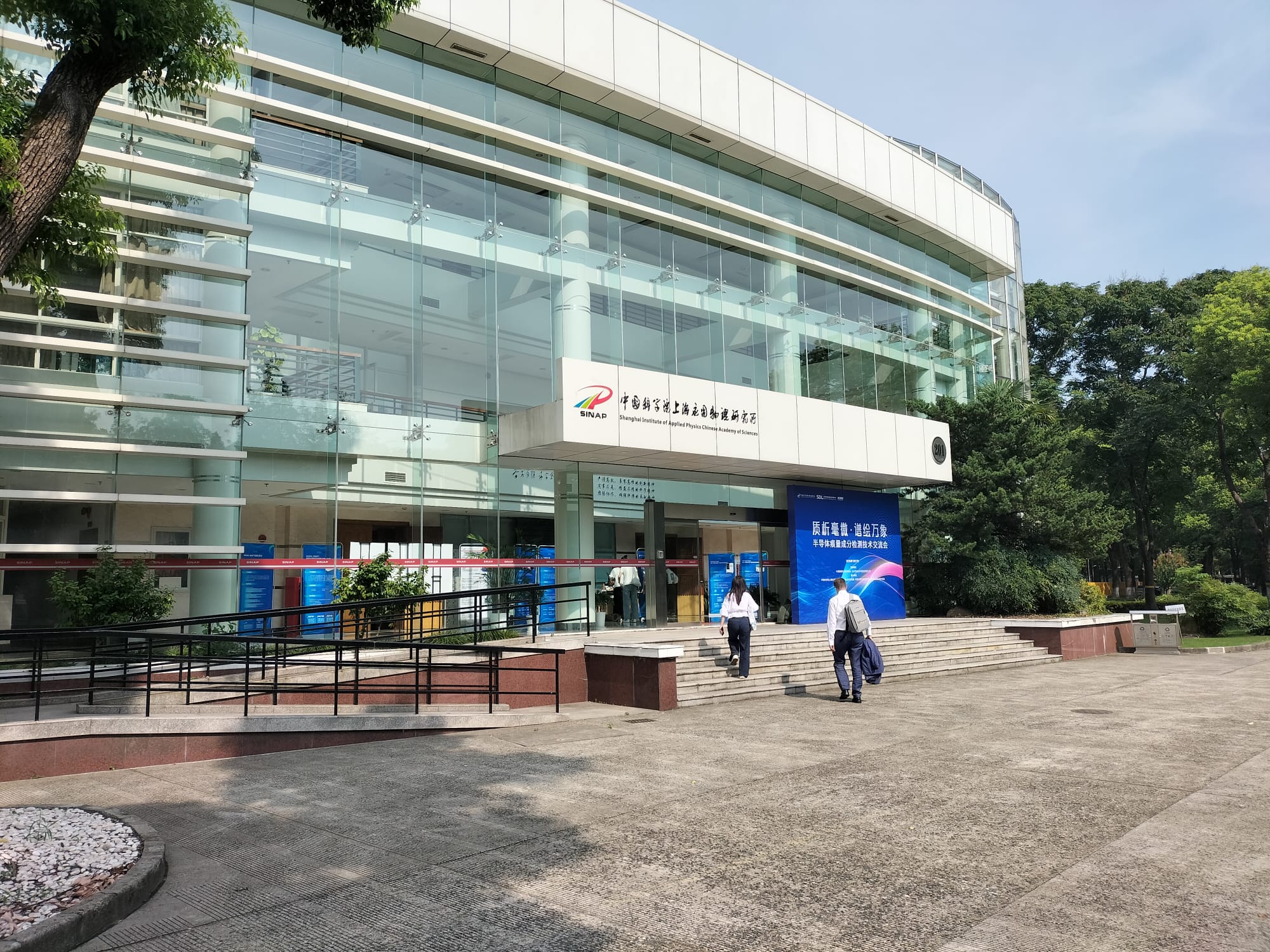
On 17th July 2025, Kore’s Managing Director, Steve Mullock, and Projects Manager, Fraser Reich, attended SDL’s first ever conference specifically related to TOF-SIMS. SDL brought together a large multi-stakeholder group from industrial, academic and governmental scientific departments, all with an interest in surface analysis. The meeting was held at The Shanghai Institute of Applied Physics (SINAP) Chinese Academy of Sciences, with major media coverage by Antpedia.
Steve gave a presentation entitled “TOF-SIMS – An Essential Technique for a Modern Surface Science Laboratory”, in which he explained the value of TOF-SIMS as the most powerful technique for analysis of the top layers responsible for many important properties such as adhesion, catalytic potential, printability, biocompatibility and wettability. Steve reinforced the message that any laboratory with XPS instrumentation should consider adding TOF-SIMS to their repertoire. TOF-SIMS is the perfect complement to XPS and FTIR, offering higher spatial resolution with less surface damage.
Fraser delivered a lecture on “The Practical Use of TOF-SIMS for Solving Problems in Material Science”, drawing on his long experience of applications development on a wide range of TOF-SIMS instruments. Fraser described how TOF-SIMS was ideal instrumentation for solving challenges where knowledge of surface chemistry is critical. He gave examples from a wide range of applications including: characterisation of polymer films and adhesion failures; self-assembled monolayer (SAM) studies; hard disk lubricant chemistry and failures; quantification of low-concentration metals on silicon wafers; imaging analysis of semiconductor patterned wafers, characterisation of unwanted particles on semiconductor devices; and shallow depth profiles of semiconductor layer structures. As he put it, “The list of possibilities is endless – any application where the chemistry of the top surface is critical could be in this list.”
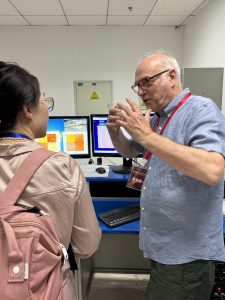
In workshop sessions in the SINAP laboratory, Fraser and Steve demonstrated the Kore SurfaceSeer I which has provided data for many scientific endeavours. SurfaceSeers provide analysis via static TOF-SIMS, rather than dynamic. The difference is that in static SIMS, the surface of the sample can be considered to be (effectively) undamaged because of the low ion dose rate, meaning that static SIMS, unlike dynamic, gives a true representation of the sample in its unspoilt state. Kore’s latest video “Static TOF-SIMS with Kore SurfaceSeer” explained this to the delegates in more detail, and generated lots of interest in the potential for scientific advances.
The meeting was a great success, and we thank SDL for introducing Kore to such an esteemed audience of interested parties from across China. We are very excited to see the expansion of TOF-SIMS into many applications in this price-sensitive sector.
Watch the video “Static TOF-SIMS with Kore SurfaceSeer” here.
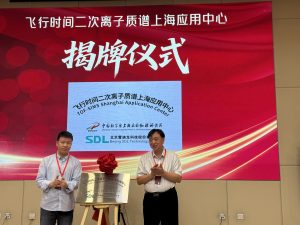
SINAP’s Director of Materials Research Dr Huanghefei and SDL’s CEO Mr Xiao Qiang Ao unveiling the TOF-SIMS Shanghai Application Center at SINAP.