Carbon nanomaterials are in the spotlight for diverse state-of-the-art research concepts and technologies: from quantum matter, which could one day enable secure quantum communication, to pigments for reflecting infrared light from windows to keep your house cool. Their multiple possibilities for chemical modification make them a prime target for top-down and bottom-up materials engineering. The so-called ‘on-surface synthesis’ bottom-up fabrication of carbon nanomaterials makes it possible to envision new nanofabrication paradigms, such as multi-layered, atomically precise carbon nanoarchitectures, which would serve as integrated, compact nanodevices.
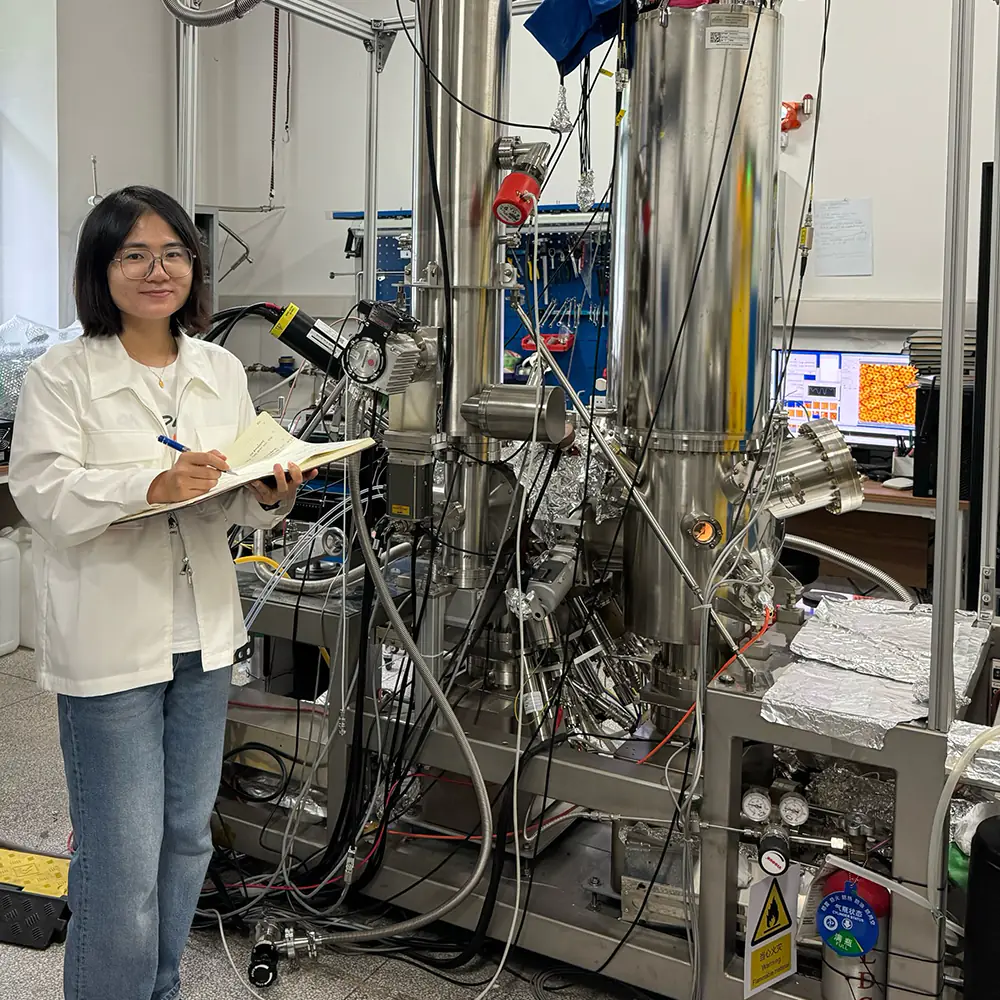
Yan Wang, Carlos-Andres Palma and team at the Humboldt-Universität zu Berlin and Institute of Physics, Beijing, have installed a custom Kore EI-TOF-MS in a 1 K scanning tunnelling microscopy (STM) ultra-high vacuum (UHV) chamber to characterize and monitor the on-surface fabrication of carbon nanomaterials. Their current research pertains to a highly coveted carbon nanomaterial: atomically precise nanodiamond.
One of their latest EI-TOF-MS discoveries is the fabrication of ‘nanographanes’ — cut-outs of graphane (a fully hydrogen-saturated graphene layer) through hydrogenation of sp2-carbon nanomaterials. Although TOF-MS is established among this research community as a leading technique for characterisation of the macromolecular reactions involved in on-surface synthesis, such as graphene nanoribbons, this is one of the first attempts to characterise such materials in situ, under UHV conditions, especially fully saturated sp3-carbon precursors of nanodiamond.
‘One holy grail of nanodiamond research is its precise fabrication from smaller pieces, much like pieces of Lego© blocks’ says Palma. ‘Once such a strategy is established, expectations of technological impact might match those which accompanied the discovery of graphene. Unfortunately, we do not know which carbon nanomaterials are the best atomically precise nanodiamond sources. We need to test many carbon nanomaterials using our TOF-MS’.
Their most recent work, uploaded in arXiv (October 2024), attempts to build diamondane-chains on metal surfaces, which might be rendered superconductive in the future. ‘Previously, our group showed that carbon nanowires made from nanographenes had conductivities similar to noble metal nanowires’ says Yan Wang, first author of the work. ‘Nanodiamond-like structures have been predicted to be superconducting at relatively high temperatures, and my project deals with the discovery of diamond nanowires. The Kore EI-TOF-MS helps me learn if the on-surface or in-architecture fabrication protocol that I chose is promising’ says Yan Wang. Kore collaborates with Yan to implement laser-induced desorption mass spectrometry, to push the on-surface synthesis frontier ever further.
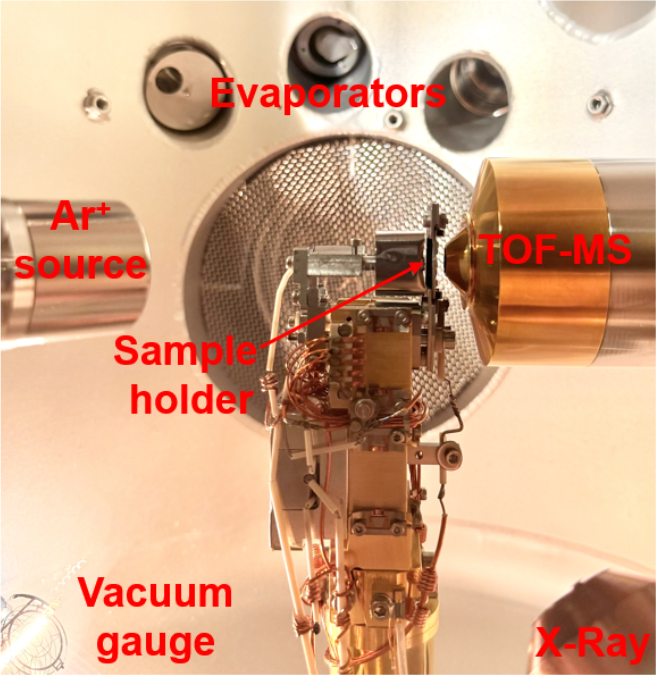
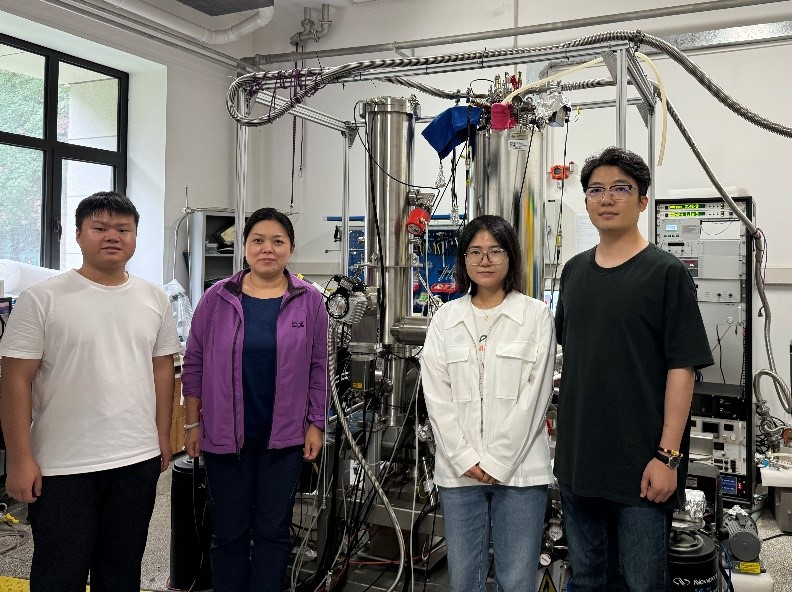
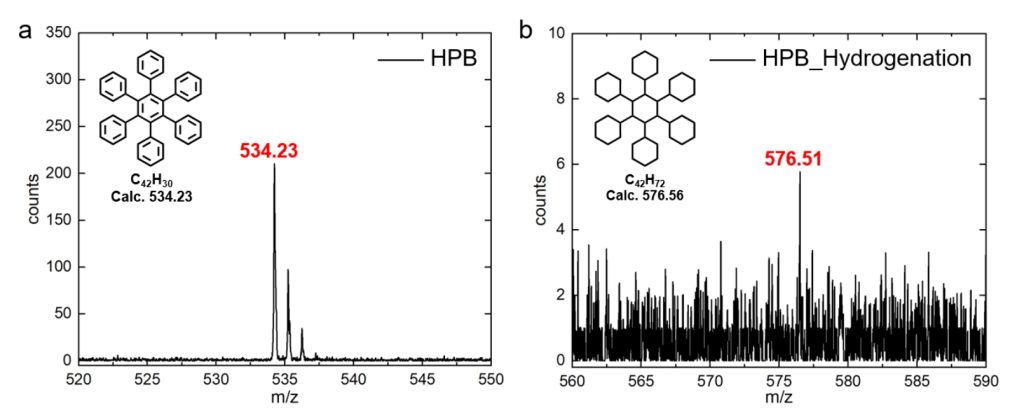
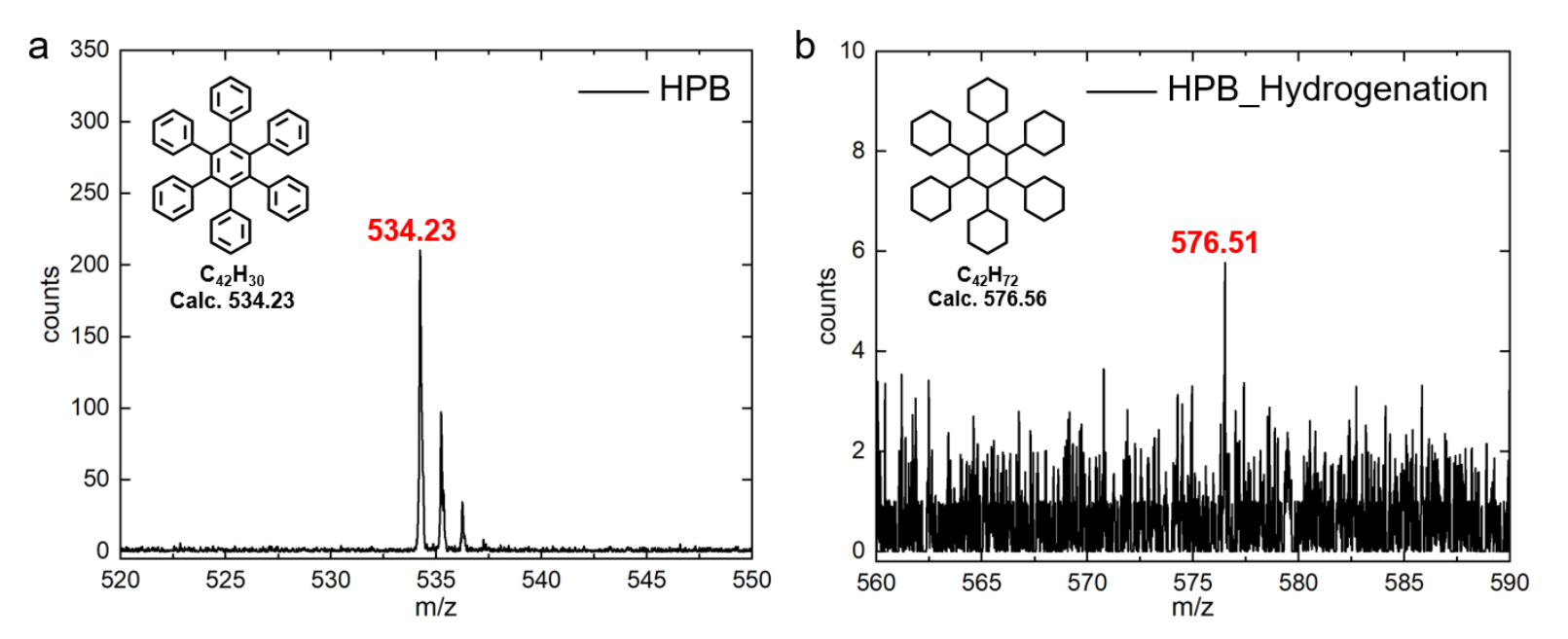 Figure 3: TOF-MS spectra of hexaphenylbenzene (HPB) molecules and fully hydrogenated HPB, respectively. a) TOF-MS of HPB before hydrogenation, the MS peak is 534.23 m/z (calc. 534.23 m/z). b) TOF-MS of fully hydrogenated HPB, the MS peak is 576.51 m/z (calc. 576.56 m/z).
Further reading
- In-architecture X-ray assisted C-Br dissociation for on-surface fabrication of diamondoid chains (2024) Yan Wang, Niklas Grabicki, Hibiki Orio, Juan Li, Jie Gao, Xiaoxi Zhang, Tiago FT Cerqueira, Miguel AL Marques, Zhaotan Jiang, Friedrich Reinert, Oliver Dumele and Carlos-Andres Palma. Submitted to arXiv 25/10/24. https://doi.org/10.48550/arXiv.2410.19466
- Hydrogenation of hexa-peri-hexabenzocoronene: an entry to nanographanes and nanodiamonds (2023) Yan Wang, Zishu Wang, Zijie Qiu, Xiaoxi Zhang, Jianing Chen, Juan Li, Akimitsu Narita, Klaus Müllen and Carlos-Andres Palma. ACS Nano 17 (19): 18832-18842. https://doi.org/10.1021/acsnano.3c03538
- Self-assembly and photoinduced fabrication of conductive nanographene wires on boron nitride (2022) Xiaoxi Zhang, Fabian Gärisch, Zongping Chen, Yunbin Hu, Zishu Wang, Yan Wang, Liming Xie, Jianing Chen, Juan Li, Johannes V. Barth, Akimitsu Narita, Emil List-Kratochvil, Klaus Müllen and Carlos-Andres Palma. Nature Communications 13: 442. DOI: 10.1038/s41467-021-27600-1
- Photon and electron induced macromolecular synthesis on insulating surfaces (2018) Carlos-Andres Palma. Editor(s): Klaus Wandelt, Encyclopedia of Interfacial Chemistry pp361-369. Elsevier ISBN 9780128098943. https://doi.org/10.1016/B978-0-12-409547-2.13700-X
- Monitoring the on-surface synthesis of graphene nanoribbons by mass spectrometry (2017) Wen Zhang, Zongping Chen, Bo Yang, Xiao-Ye Wang, Reinhard Berger, Akimitsu Narita, Gabriela Borin Barin, Pascal Ruffieux, Roman Fasel, Xinliang Feng, Hans Joachim Räder and Klaus Müllen. Analytical Chemistry 89 (14): 7485-7492. https://doi.org/10.1021/acs.analchem.7b01135