The air we breathe is fundamental to our quality of life. With air pollution now recognised as a leading cause of death worldwide, researchers are characterising the complex processes in our atmospheric, outdoor and indoor air. This new knowledge is being accumulated by combining sensitive analytical measurements with powerful modelling techniques.
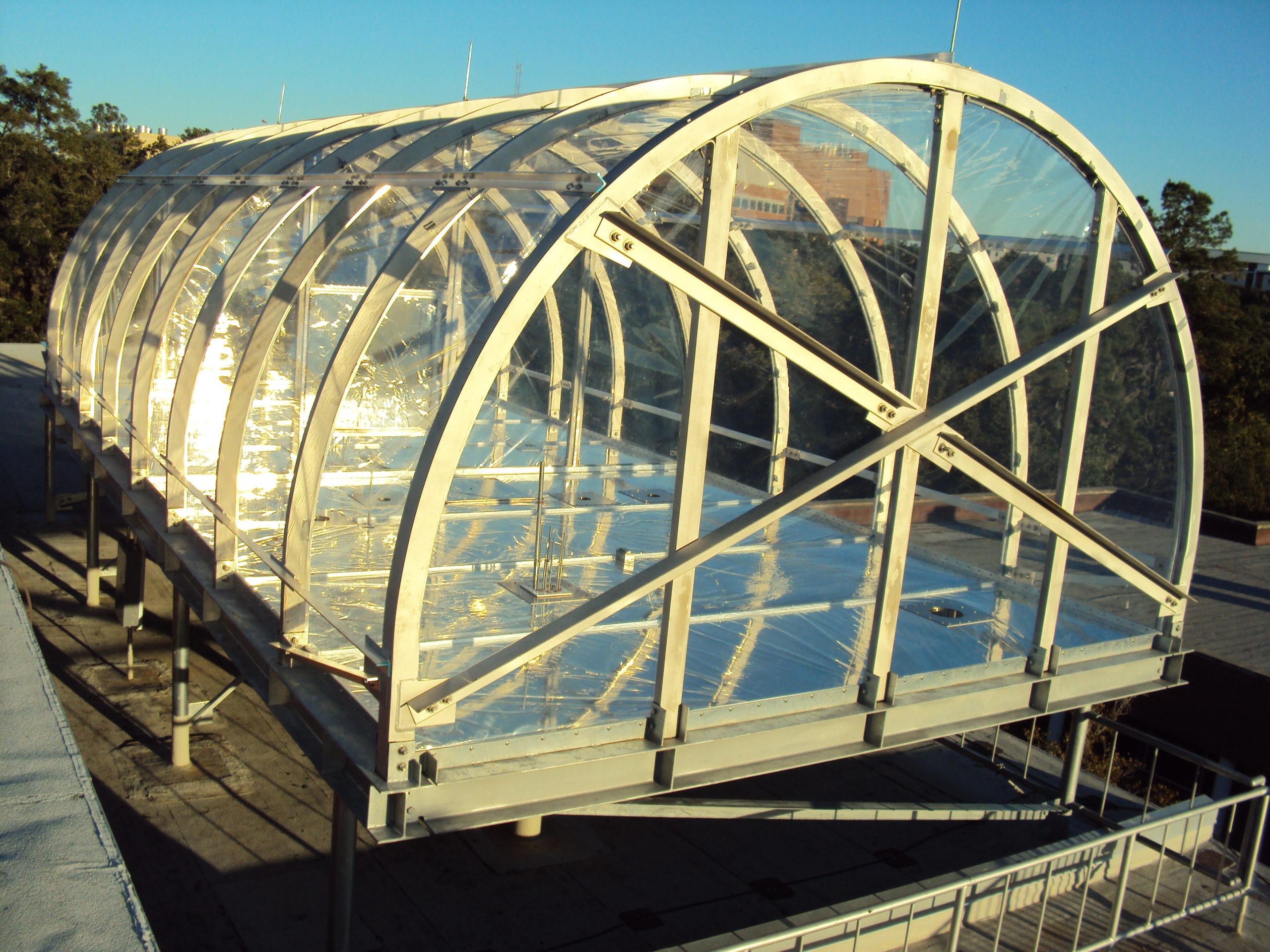
We recently installed a Kore PTR 3c in Dr Myoseon Jang’s research laboratory at the Department of Environmental Engineering Sciences, University of Florida, USA. Here, a large outdoor smog chamber known as the University of Florida Atmospheric Photochemical Outdoor Reactor (UF-APHOR) has been installed on the roof directly above the laboratory where the PTR 3c is situated.
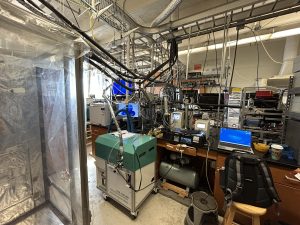
Myoseon uses her PTR 3c to directly characterize products in real time from atmospheric processes acting on precursor hydrocarbons under various conditions in both indoor and outdoor chambers. With most of us spending 90% of our time indoors, identification of the gas mechanisms acting both indoors and out allows Myoseon to predict the health effects of air pollutants in relevant circumstances.
Atmospheric pollutants such as aromatic hydrocarbons (e.g. toluene, benzene) and polyaromatic hydrocarbons (PAHs, e.g. naphthalene) can react to form secondary organic aerosol (SOA), a particulate matter that is known to be carcinogenic, cytotoxic, and a contributor to climate change. Sources such as paint, solvents, building materials, cooking fumes, personal care products and cleaning agents are all around us. The reactions are affected by environmental variables such as temperature, natural (UV)/artificial (LED and fluorescent) light, ozone, NO2 levels, humidity and seed conditions.
Myoseon identifies major gas products of naphthalene photooxidation, e.g. naphthoquinone, 2-formycinnamaldehyde, phthaldialdehyde, and phthalic anhydride. Compounds can be tentatively identified by two methods: (1) comparison against molecular weight of products measured via GC-FIR or GC-MS; or (2) comparison against products predicted by the UNIfied Partitioning-Aerosol phase Reaction (UNIPAR) SOA Model, which predicts SOA formation via multiphase reactions of hydrocarbons. This model is uniquely able to simulate the impact of environmental variables on SOA formation and the significance of different precursors on SOA formation potentials.

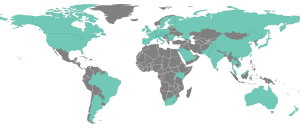
We are proud to collaborate with Myoseon and support her strong progress with this important research. By driving down the cost of PTR-MS, Kore aims to make air quality research accessible worldwide, to tackle the global air quality crisis. Our mass spectrometers now operate in over 50 countries.
Further reading
Sanghee Han and Myoseon Jang (2024) Simulation of Secondary Organic Aerosol formation using near-explicitly predicted products from naphthalene photooxidation in the presence of NOx. ACS Earth and Space Chemistry 8 (12):2483-2494. DOI: 10.1021/acsearthspacechem.4c00217
Spencer Blau and Myoseon Jang (2024) Modeling impacts of indoor environmental variables on secondary organic aerosol formation. Science of The Total Environment 955:177036, https://doi.org/10.1016/j.scitotenv.2024.177036.